Pink Milk?
Is it Fact or Fiction??

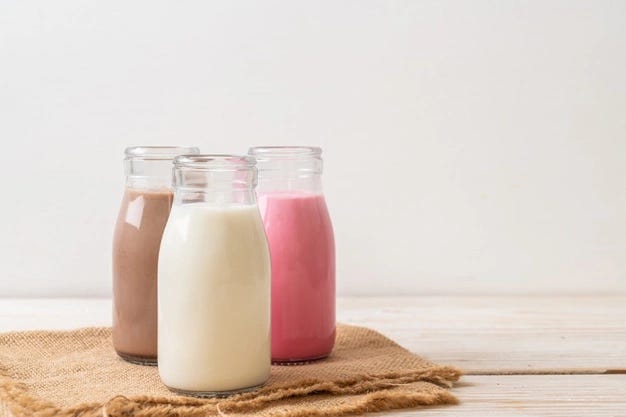
The return of Mammaread is inspired by colorful milk, as I have recently come across some reports that colorful, specifically pink, milk exists in the natural world !
The famed pink milk producers are as follows:
1) Humpback whales, who eat a ton of pink krill.
2) Echidnas because of high iron content.
3) Hippos.
4) Yaks because of blood in early lactation.
Is it too good to be true? Let’s do some myth busting.

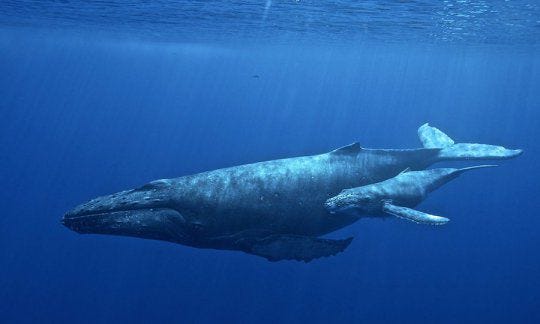
First up in fact or fiction is humpback whale milk.
This one has the potential to be a bit confusing. There is still a lot that is unknown about whale milk, due to the extreme difficulty of accessing the mammary gland of a gigantic underwater species.
While at first pass it seems that several online publications are in agreement that humpback whale milk is pink, including a“Maui Don: Dolphin Dude” blog post, a Thought Co piece, and a reddit thread, there is not a single academic paper or article with concrete references that can be scrounged up stating that humpback whale milk is pink.
It is possible in humans for breast milk to be tinged different colors if the mother is eating colorful foods. While whales do eat a lot of krill, they have generalist diets that also include small fish, like herring and mackerel (Clapham 2017). However, during the majority of lactation humpback whales are actually fasting, which is incredible but also means they are not consuming any krill during that time (Oftedal 1997, 1993). It is still possible that pink milk could occur in that second phase of lactation, but we do not currently have any evidence to confirm this phenomenon.
Where did this rumor come from? It seems that all the sources stating that humpback whale milk is pink comes from a sentence (now deleted) from Wikipedia… Darn.
Pink humpback whale milk = Most likely fiction.
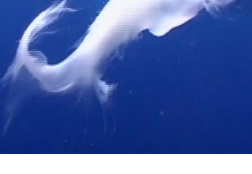
This is not to say that humpback whale milk is not worth your time, it is still very very cool! Humpback whales mothers fast for a large part of their lactation while feeding their babies from 90 to 230 kg of extremely energy rich milk a day (Oftedal 1997). Their milk is very thick so it won’t disperse quickly in water, as you can see in the photo below, which was taken after feeding.
What about echidnas?
Echidnas, like humpback whales, are wildly fascinating mothers. Their babies (called puggles) feed from “milk patches” instead of nipples and hatch from eggs (Stannard Miller and Old 2020).
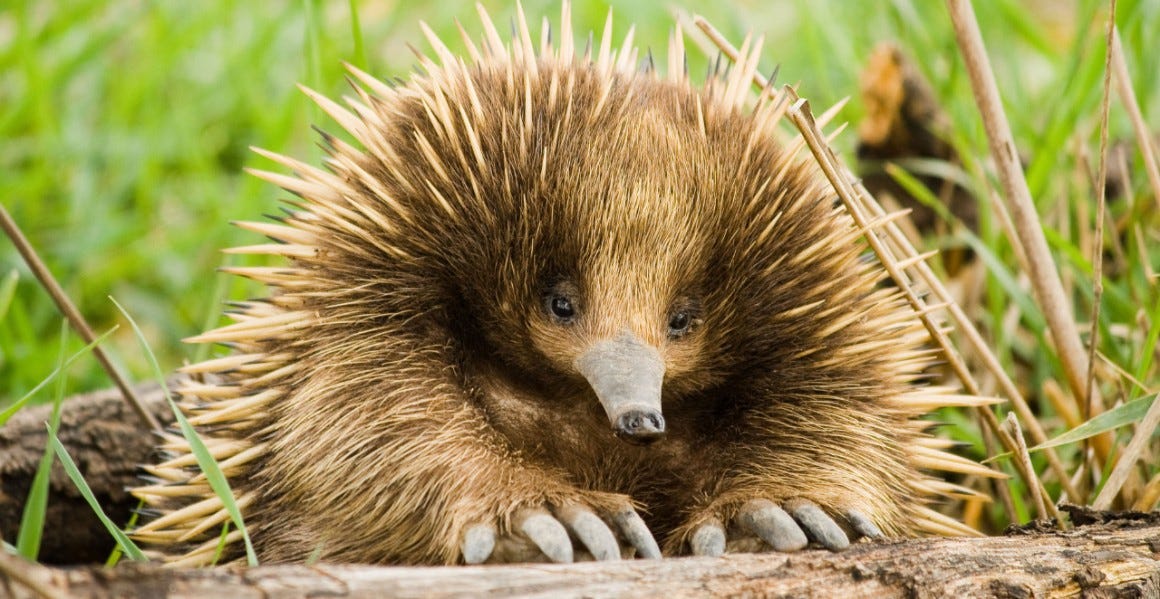
As for whether their milk is colorful? “The Animal Facts. com” says it is so, but we need to go a little deeper. While it is true that echidna milk can contain 3 times more iron than non-monotreme or marsupial species and even more than platypuses (Griffiths et al 1984, 2020), does that translate to pink milk?
It turns out that it does! Echidna milk has so much iron that it appears pink (Schwab et al 2005, Miller 2016). Echidna milk is very rich in iron because their offspring are born with very underdeveloped livers that are unable to store much iron (2020).
Pink echidna milk = FACT!!
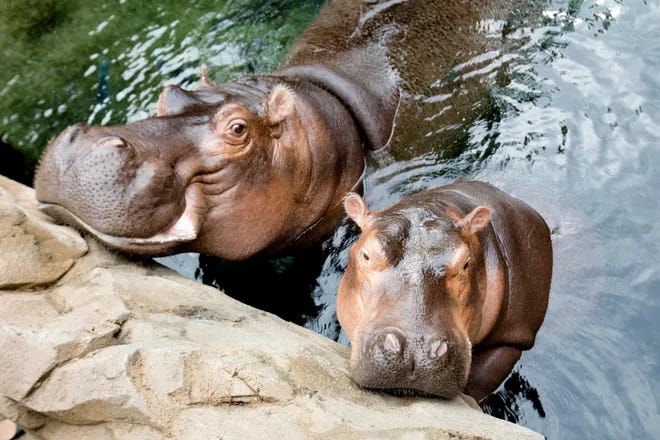
Do hippos have pink milk?
While it has been categorically debunked that hippos produce pink milk, it is probable (but only very slightly) that hippo milk can appear pink or a bit reddish in some cases.
Hippos produce a fluid, called “hipposudoric acid” that comes out clear, polymerizes to a red pigment, and then eventually turns brown (Saikawa et al 2004). It acts as an antiseptic and a sunscreen and is often referred to as “red sweat” or “blood sweat” even though it is neither blood nor is it sweat or even produced by sweat glands (2004)!! When milk is produced, it has the, again very slight, potential to mix with the hipposudoric acid, making it appear pink.
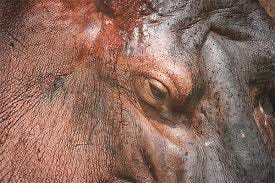
This rumor was popularized by National Geographic in 2013 when they posted, “Friday Fact: A hippo's milk is bright pink” on their Facebook page (and it is still up!). It has seemed to inspire a frenzy of online post, publications, comments, forums, etc.
However… There is no scientific evidence that this happens consistently enough to accurately state that hippos have pink milk and is mechanistically very improbable, as hippopotamus milk usually goes straight into the mouth of their suckling babies, as it should.
Pink hippo milk = Fiction.
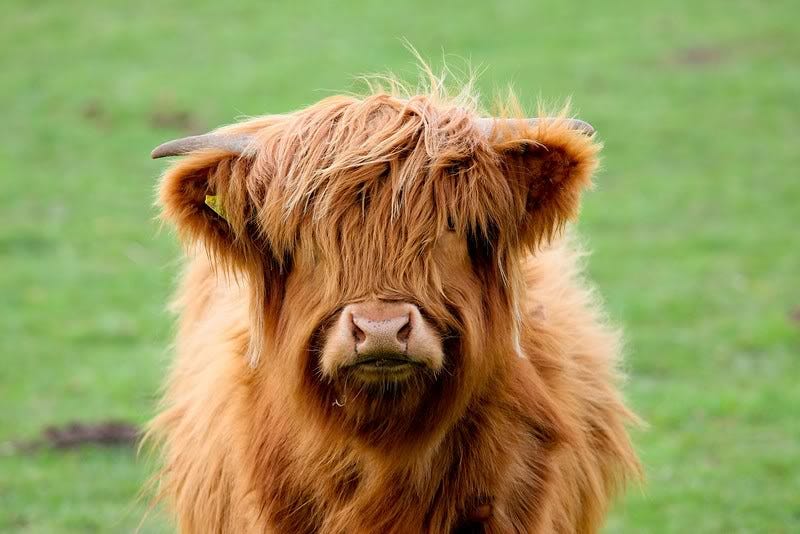
Yaks?
Yak milk is rumored to be pink at the start of lactation because of some mammary gland bleeding in the colostrum (first milk produced post-birth), called “beastings”. This is not an altogether undocumented phenomenon in humans. There can be several causes for blood in breast milk, often during the earliest phase in lactation due to the increase lobuloalveolar growth to prepare the mammary gland for milk production (Barco et al 2014).
There is some division on the internet over whether pink yak milk is a common enough occurrence to warrant the pink milk claim. What we do know is that there is some evidence that many bovines have red tinged milk because of mastitic infection (infection of the breast tissue) and that the color gradually filters out (McGrath et al 2015). Mastitic infection, as well as a bacterium called Serratia marcescens, can also cause pink milk in humans and cows (and likely other mammals as well), yet we do not classify humans or cows as pink milk producers (del Valle and Salinas 2014).
So can we accurately state that yaks produce pink milk? It’s a little iffy.
Pink yak milk = Pink human milk… so fiction with a hint of fact.
Is there a pink milk conspiracy?
It seems that we were, perhaps, seeing pink milk through rose colored glasses after all.
When you google pink milk on the internet you can find a wealth of forums, tweets, articles, posts, all forms of vaguely unreliable internet information that will tell you that hippos, humpback whales, yaks all have pink milk. Hippos having “pink milk” is the first option that Google presents, Nat Geo posted it on their Facebook page !!
The rather widespread and varied pink milk rumors will make you think, who out there wants us to believe there is abundant pink milk in the world? Is it a pink milk conspiracy? More likely it is due to a runaway game of internet telephone…
As Alec Baldwin once said:

Except for echidnas of course.
References:
Barco I et al. 2014. Blood-stained colostrum and human milk during pregnancy and early lactation. Journal of Human Lactation, 30(4): 413-415. doi: 10.1177/0890334414539041
Clapham PJ. 2017. Humpback whale, Megaptera novaengliae. In: Würsig B, Thewissen JGM, Kovacs KM. Encyclopedia of Marine Mammals. 3rd ed. Cambridge (MA): Academic Press, p. 489-492. doi: 10.1016/C2015-0-00820-6
del Valle CA, and Salinas ET. Pink breast milk: Serratia marcescens colonization. AJP Reports, 4(2): e101–e104. doi: 10.1055/s-0034-1387934
Griffiths M, Green B, Leckie RMC, Messer M, and Newgrain KW. 1984. Constituents of platypus and echidna milk, with particular reference to the fatty acid complement of the triglycerides. Aust. J. Biol Sci, 37: 323-329. doi: 0004-9417/84/050323$02.00
McGrath BA, Fox PF, McSweeney PLH, and Kelly AH. 2016. Composition and properties of bovine colostrum: a review. Dairy Science and Technology, 96:133–158. doi: 10.1007/s13594-015-0258-x
Miller EM. 2016. The reproductive ecology of iron in women. Yearbook of Physical Anthropology, 159:S172–S195. doi: 10.1002/ajpa.22907
Oftedal OT. 1993. The adaptation of milk secretion to the constraints of fasting in bears, seals, and baleen whales. Journal of Dairy Science, 76(10): 3234-3246. doi: 10.3168/jds.S0022-0302(93)77660-2
Oftedal OT. 1997. Lactation in whales and dolphins: Evidence of divergence between baleen- and toothed-species. Journal of Mammary Gland Biology and Neoplasia, 2(3): 205-230. doi: 10.1023/A:1026328203526
Saikawa Y et al. 2004. Pigment chemistry: The red sweat of a hippopotamus. Nature, 429(6990):363. doi: 10.1038/429363a
Schwab IR and McMenanmin P. 2005. How do I fit in? Br J Opthalmol, 89:129. doi: 10.1136/bjo.2004.059048
Stannard HJ, Miller RD, and Old JM. 2020. Marsupial and monotreme milk- A review of its nutrient and immune properties. PeerJ, doi: 10.7717/peerj.9335.
Zoidis AM and Lomac-MacNair KS. 2017. A note on suckling behavior and laterality in nursing humpback whale calves from underwater observations. Animals, 7(7): 51. doi: 10.3390/ani7070051